
UP AND DOWN THE MOUNTAIN
Opinions vary as to the exact historical basis of this nursery rhyme; but many of us are familiar with the words:
Oh, the grand old Duke of York,
He had ten thousand men.
He marched them up to the top of the hill,
And he marched them down again.
And when they were up they were up,
And when they were down they were down,
And when they were only half way up,
They were neither up nor down.
Now suppose you were one of the Duke’s men. And he marched you all the way up to the top of the hill, and then he turned you around and marched you right back down again. What’s the point? You were down, then you were up, and now you’re down again. Why bother?
That’s my question when it comes to mountaineering or even hill-climbing. Why expend all the effort to go up, when you know perfectly well that all you’ll do when you get there is come down again? My climbing friends tend to give me one of two answers: either “It’s a challenge—you climb it because it’s there!”; or “Before you come down, you have the experience of the view from the top.” Personally I relate to the second of these reasons more than the first, and so I make a mental note—“Never allow yourself to be talked into climbing on a foggy day!”
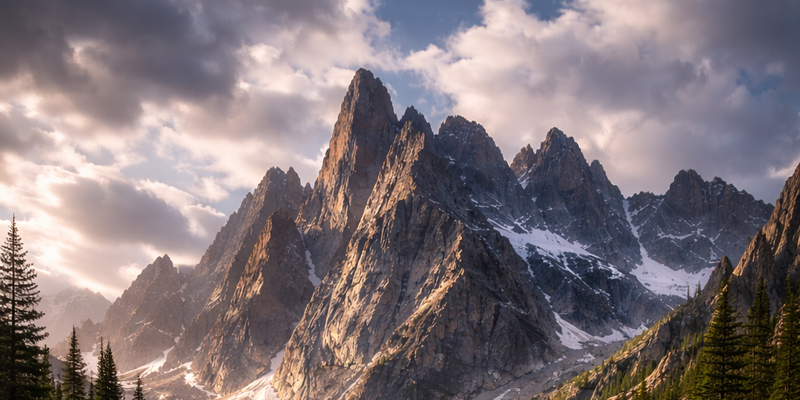
On one occasion, Jesus took His inner core disciples up a mountain and down again. It was even cloudy at the top! And yet the experience stayed with them for the rest of their lives. It was literally what we’d call a “mountaintop experience”.
Here is the account from Luke’s Gospel:
28About eight days after Jesus said this, he took Peter, John and James with him and went up on to a mountain to pray. 29As he was praying, the appearance of his face changed, and his clothes became as bright as a flash of lightning. 30Two men, Moses and Elijah, 31appeared in glorious splendour, talking with Jesus. They spoke about his departure, which he was about to bring to fulfilment at Jerusalem. 32Peter and his companions were very sleepy, but when they became fully awake, they saw his glory and the two men standing with him. 33As the men were leaving Jesus, Peter said to him, “Master, it is good for us to be here. Let us put up three shelters — one for you, one for Moses and one for Elijah.” (He did not know what he was saying.) 34While he was speaking, a cloud appeared and enveloped them, and they were afraid as they entered the cloud. 35A voice came from the cloud, saying, "This is my Son, whom I have chosen; listen to him." 36When the voice had spoken, they found that Jesus was alone. The disciples kept this to themselves, and told no-one at that time what they had seen. Luke 9:28-36
The Mount of Transfiguration was an experience unique to Peter, James and John. Yet we can relate to it through our own awareness of the mountaintop.
When God takes us up the mountain:
Be blessed by the experience
Why take Peter, James and John with Him? If they had not been there, we would not have had the report of what happened! Jesus told them to keep the whole thing to themselves until after His resurrection (see Matthew 17:9), but after that the details could be revealed as related by three eyewitnesses. However it seems that the main reason for their presence was for their own benefit, for their spiritual experience.
They had been sleepy, but sleep fled as they saw the brightness of His clothes, and Moses and Elijah talking with Jesus in glorious splendour. Peter said, “It is good for us to be here,” and that was true!
God wants us to have spiritual experiences. To
seek these or to
try to make them happen is generally unwise. But God still wants to initiate them. They can come in personal prayer, or in powerful meetings, or even in public settings. They can come in times of intense spiritual focus, or unexpectedly in more mundane circumstances. But however a spiritual experience comes,
experience it. Don’t sleep through it! On this occasion, Peter, James and John woke up; but the same three disciples were less successful in that regard in Gethsemane. Don’t miss it, don’t run away from it, take it, enjoy it—be blessed by it.
Be aware of the danger
As the men were leaving Jesus, Peter said to him, “Master, it is good for us to be here. Let us put up three shelters — one for you, one for Moses and one for Elijah.” Luke 9:33
This is our natural human tendency. We want to mark the spot of the significant experience, to box it in or cover it over, to hallow the site—“let us put up three shelters”. So we build a mausoleum over the location. Or we erect a church building, like the Church of the Nativity. We attempt to preserve the experience and make a holy place of the site where it chanced to occur.
In Numbers 21, God’s people were dying from being bitten by poisonous snakes. God’s instruction for the deliverance of the people was for Moses to make a bronze snake and set it up on a pole. Whoever was bitten could then look to the model snake on the pole, and as a result would live. When the danger was past and the experience over, the bronze snake was preserved in honour of what had happened. However by King Hezekiah’s time some 650 years later, it had become an object of worship and the people burned incense to it! Wisely, Hezekiah destroyed it. It had served its purpose a long time before.
In most of our towns and cities we have grand structures, church buildings that once were functional and filled with people, but now are simply monuments to what God did. Having started with enthusiasm and life, we’re now saddled with the upkeep of the shell. There may be architectural and historical interest—but the shell testifies to what God once did, rather than to the God who does these things.
Experiences and meant to be experienced. Enjoy them, be blessed by them—and let them go! As Peter said, it’s good for us to be on the mountain, but don’t let’s box in our experiences, build empty shelters and worship what God did! That’s the danger.
Be concerned with the reality
After the mountaintop experience, some of us would want to stay on the mountain and wait until God moves again! But for Peter, James and John it was time to come down. At the foot of the mountain, they were faced with harsh reality—arguing, crowds, teachers of the law, and human need.
14When they came to the other disciples, they saw a large crowd around them and the teachers of the law arguing with them. 15As soon as all the people saw Jesus, they were overwhelmed with wonder and ran to greet him. 16“What are you arguing with them about?” he asked. 17A man in the crowd answered, “Teacher, I brought you my son, who is possessed by a spirit that has robbed him of speech. 18Whenever it seizes him, it throws him to the ground. He foams at the mouth, gnashes his teeth and becomes rigid. I asked your disciples to drive out the spirit, but they could not.” 19“O unbelieving generation,” Jesus replied, “how long shall I stay with you? How long shall I put up with you? Bring the boy to me.” ……... 25When Jesus saw that a crowd was running to the scene, he rebuked the evil spirit. “You deaf and mute spirit,” he said, “I command you, come out of him and never enter him again.” 26The spirit shrieked, convulsed him violently and came out. Mark 9:14-19, 25,26
Sometimes we leave the mountaintop and come to earth with a bump. But we needn’t. For Peter, James and John, Jesus was still with them—and He’s with us! Also the power of God was manifest, even down the mountain (see Luke 9:42,43). We may not have the rarefied mountain air, but we still have the presence and the power of God. The outworking of spiritual experience is not just revelling in happy memories, but equipping. The need was down the mountain. That was the reality. Human need camps at the foot of every Mount of Transfiguration.
So be blessed by the experience, be aware of the danger, and be concerned with the reality.
It’s wonderful to be on the mountaintop with God. But it can’t last forever. We have to come down again to meet the reality that is other people. The need is on the plain and in the valley.
George Alexander
Copyright © 2006, 2025 by George Alexander. All rights reserved.
George Alexander, 19/02/2026